
As we have explored recently, the side-by-side is enjoying something of a resurgence in popularity, with more and more people choosing to use a horizontally configured gun as their main game gun.
It seems probable that many of those who use a side-by-side today may well have started their shooting journey with a superposed model, and, assuming that the trend is set to continue, that there are lots of O/U users thinking about making the change. What’s more, those who plan to continue to do much clay shooting, will probably hang on to their sporters.
However, there are some fairly significant differences between the two types of shotgun, and swapping between them can take some getting used to. So what are the key things to think about when making the change? We spoke to Edward King, importer of both AYA and Rizzini, two of the more popular brands with side-by-side users, and a noted side-by-side shot himself, to take a look at some of the key differences that converts will need to contend with.

“The first thing to say,” says Edward, “is that the similarities far outweigh the differences. After all, the barrels, whether arranged on the x or the y axis, are still very close together. That said, there are a few differences which will take some getting used to at first.”
Weights and measures
He continues:
“The most immediately noticeable difference between a side-by-side and an over-and-under is the weight. Side-by-sides are typically a fair bit lighter than their vertically-arranged cousins, requiring a few adjustments to the way you shoot.”
“In many shooting scenarios the lighter gun makes for a more instinctive, naturalistic shooting style - think fast-paced grouse, lowland partridges zipping over a high hedge or a snap-shooting woodland pheasant drive. The comparative lack of weight makes the gun more manoeuvrable.”

However, if you are used to shooting with the more weighty O/U, you may find that controlling your swing is somewhat trickier. This effect could be compounded by the fact that side-by-sides typically have shorter barrels. Counter-intuitively, you may find that you need to be a bit more considered in the way that you address birds with the lighter side-by-side.
If you stick to the same cartridges that you used when you were shooting with an O/U, you’ll probably find that you experience rather more recoil - the lighter gun will absorb less of the energy, and that energy is not directed straight back, but somewhat cock-eyed, so you may find that the extra thump takes a bit of getting used to. There will also be more pronounced muzzle flip. Making sure that the gun fits you properly will go a long way to reducing both of these, as will using somewhat lighter cartridges - do you really need 32g 4s anyway?!
Get a grip
Most side-by-sides have a traditional straight-hand-stock, whereas most O/Us have a pistol or semi-pistol grip. The advantage of the latter is that it helps to ensure a consistent gun mount by ensuring that the hand is always in the same place. Making that switch from one to the other may throw your previously grooved mount.
Edward advises: “If you are buying a new side-by-side, such as the Rizzini BR552, you will be able to specify that you want a pistol grip instead of a straight-hand stock, and while that may compromise some of the aesthetic pleasure of using a side-by-side, the consistency that it would offer might compensate for that!”

Couple this with the fact that the splinter forend found on most side-by-sides is not really intended to be held in the same way that the beavertail forend of an O/U is, and you’ll likely find that you feel a bit less in control. The key thing is to avoid trying to grip the barrels with your fingers and thumb wrapped over the top, which will block your vision and cause you to lift your head from the stock.
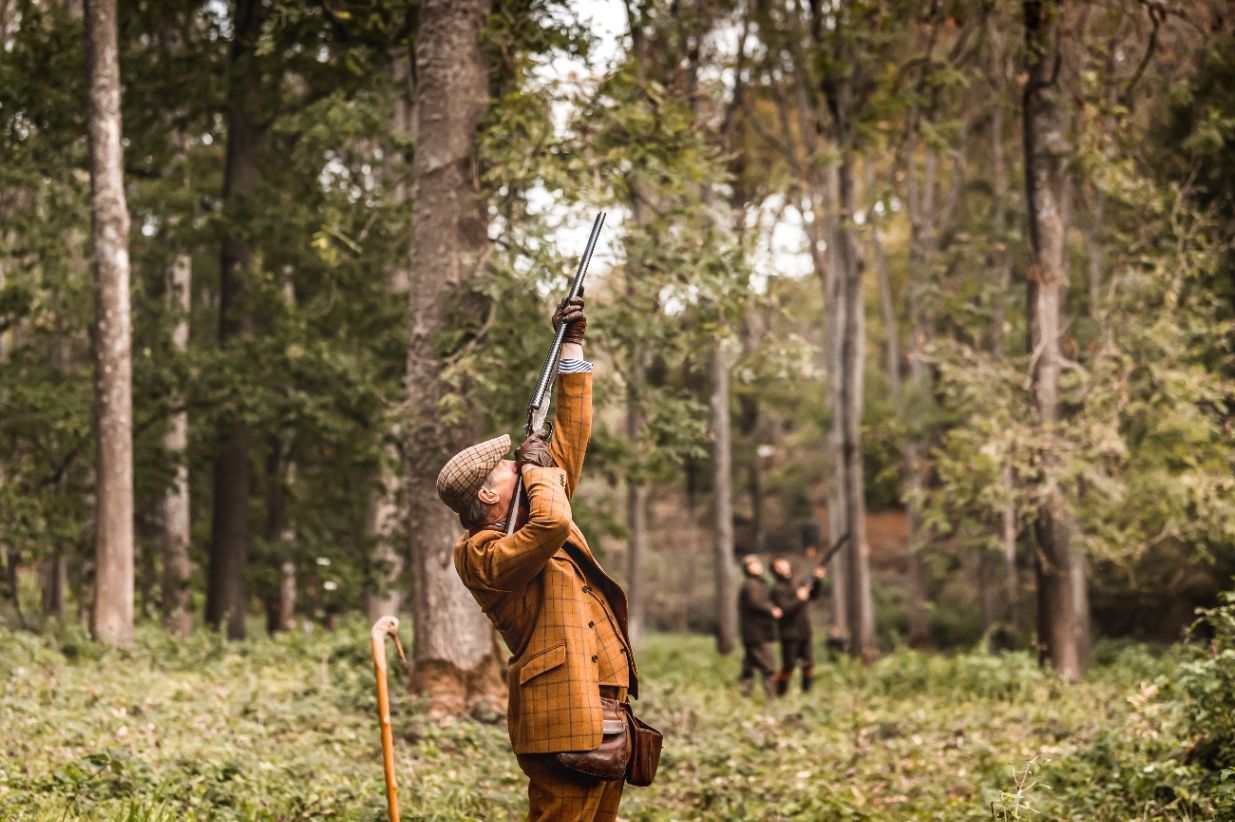
Edward highlights that the great side-by-side shots tend to shoot with a very straight leading arm, not gripping the forend at all. “A good pair of shooting gloves is a must for any side-by-side shot,” he notes.
Trigger warning
Perhaps the change that O/U users worry about the most is the switch from a single trigger mechanism to a double trigger, which most side-by-sides are equipped with. “Of all the things to worry about,” says Edward, “this is probably the least important, as it is simply a question of shooting enough that you retrain your muscles to slide your finger back for the second trigger.” He adds that as with grips, on many modern side-by-sides the customer can opt to have a single trigger fitted.
Sight picture
The final aspect that may take some getting used to is the amount of rib the shooter sees when the gun is mounted. This is perhaps the one difference that makes shooting a side-by-side trickier than shooting an O/U. Because the barrels are stacked on an O/U they are more ‘pointable’ than a SxS. “This means that gunfit is extra important on a side-by-side,” says Edward, “to ensure that the master eye is directly over the rib.”
Edward notes that for certain types of shot the configuration of the barrels on a SxS can cause the shooter to lose sight of the bird, meaning that different techniques may be required, “but perhaps that is best saved for another article!”
Find out more about ASI's range of Rizzini and AYA shotguns.
Comments
Loading comments…
Post a comment
to post a comment.