
Words by Georgina Roberts, in partnership with Rizzini.
When it comes to shotguns, the balance plays a crucial role in both movement and control. Balance and recoil are inherently linked; a well-balanced shotgun can significantly mitigate the impact of recoil, improving accuracy and reducing discomfort. The new Rizzini BR240 is an exemplary model that showcases meticulous attention to balance and recoil management.
The importance of balance
The ideal balance of a shotgun refers to equal distribution of weight along the length of the shotgun. A well-balanced shotgun feels neither front-heavy nor back-heavy, but should balance on the hinge point of the action with the majority of weight to be within the hands, allowing for smoother transitions and better control. This balance is achieved by careful consideration of the materials used, the design of the barrel, stock, and other components.

In a real-life situation, a balanced shotgun enhances control, meaning you can be agile and change direction with ease and speed. Balance also helps us by reducing fatigue, for example, if the gun is front-heavy, perceived exertion when moving the gun will be significantly higher, either whilst clay shooting or shooting live quarry. This exertion can also impact accuracy over a prolonged period of time.
Here’s a snippet taken from the book 'Shotguns and Cartridges for game and clays', by Gough Thomas: ‘Properly regarded, balance is bound up with movement and energy. A clue to its real nature is to be found in an expression for which I believe we are indebted to the Americans - ‘a fast-handling gun’. Such a gun is one that, with minimum expenditure of energy on the part of the user, can be swung quickly and easily from one position to another, and more particularly from the carrying position to the shoulder.’

The Rizzini BR240 is a great example of how modern shotgun design can address both balance and recoil. Rizzini, a renowned name in the firearms industry, has a reputation for crafting high-quality shotguns that blend traditional craftsmanship with innovative technology and the BR240 is no exception. One thing which is of particular note with the Rizzini BR240 is its balance, with its weight equally distributed over the hinge point of the action, resulting in a gun which feels natural to move and enables quick, smooth target acquisition.
“Solidity is very much at the heart of Rizzini’s competition guns. The longevity of a gun is decided by a number of key factors but the main ones are the quality of the steel and the design of the locking system.” says Edward King, Managing Director of ASI.

The BR240 achieves its balance through the use of durable materials as Edward mentions. The barrel is crafted from high-quality steel, ensuring strength without unnecessary weight. Beyond this, the stock, often made from high-quality, straight grain wood, is not only aesthetically pleasing but also contributes to the overall balance as well as positively managing recoil.
Recoil and its effects
Recoil is the backward force exerted when a shotgun is fired, the force results from the conservation of momentum, as the expanding gases from the burning of the powder propel the shot forwards and out of the barrel, causing an equal and opposite reaction against the shotgun and consequently the person pulling the trigger. Excessive recoil can lead to flinching, fatigue, and even injury over extended periods of shooting. Managing recoil effectively is essential for maintaining accuracy and ensuring a positive shooting experience.

Recoil is influenced by several factors, including the weight of the shotgun, the load and velocity of the ammunition, as well as the design and features of the gun. A heavier shotgun generally experiences less recoil because the mass of the gun absorbs more of the energy. However, a heavier gun can also be more cumbersome to handle, making balance even more critical.
How does balance affect recoil?
Whilst balance itself doesn’t change the physical amount of recoil generated, it can significantly affect how much recoil is perceived and managed by the shooter. An unbalanced shotgun will react in ways that will be detrimental to the person pulling the trigger.

One of the most obvious impacts will be muzzle flip, particularly in shotguns which are back-end heavy. Muzzle flip is acutely tied to recoil. As mentioned earlier, when a shot is fired, the force propels the shot forward and out of the barrel which in turn generates recoil, because of the position of our grip on the fore-end and the stock is below the barrel and the gun’s centre of mass, this backward force creates a rotational movement which causes the muzzle to rise.
If the gun is balanced, recoil will travel through the gun with far less effect on our point of aim, meaning you can be more accurate and therefore more consistent, purely down to the fact that you have more control and stability.

There are many different preferences and abilities that come into consideration when thinking about balancing a gun, for example, one-handed shooters (SG-U in World Shooting Para Sport) may prefer a back-end heavy as a way to help them to move the gun. In order to compensate for this, you are able to use various methods, including porting, to reduce the perceived recoil.
Balancing a gun
No-one likes feeling like they’ve had a few rounds with Mike Tyson, but there’s been a point in most people’s lives where we have bluffed about how much recoil we’ve felt.
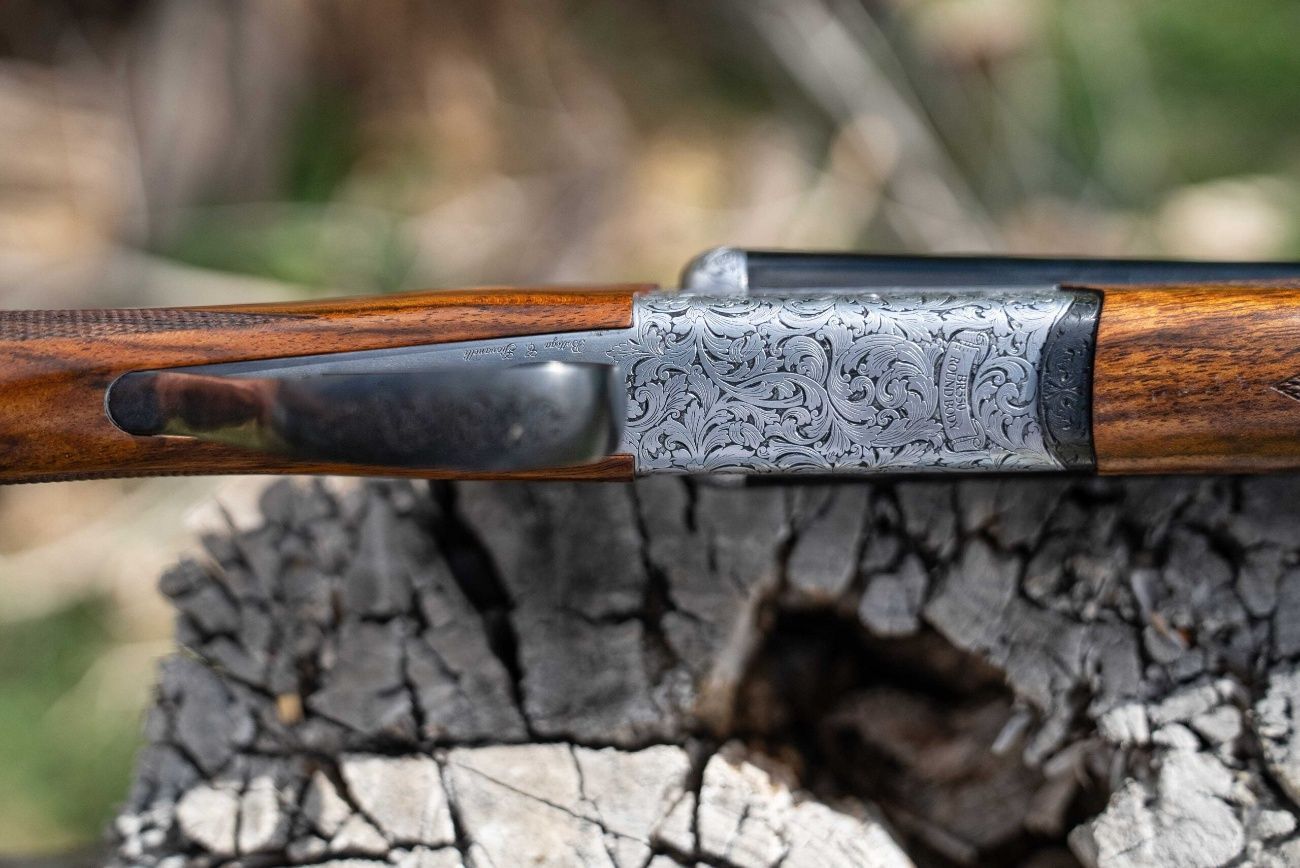
Everyone will have a different preference when it comes to balancing a gun, but if you’re looking to make some adaptations to what you have, this can be done in a number of different ways, such as adding stock weights if the gun is front-end heavy and weights to the barrels or fore-end if the gun is back-end heavy. Whilst this is in simple terms, it is a non-permanent way of being able to tweak the balance of the gun so you can find out what set up is right for you and your technique.
If you’re looking for something to upgrade to something new and well-balanced off the shelf, it’s worth looking at the new Rizzini BR240 and R240 EL models. As Edward explains, “Compromise has never been a word in the Rizzini dictionary, and they understand the importance of quality when it comes to raw material; this brings with it an increase in the price, but it is better to buy once well than a number of times cheaply. [...] No black magic here, just good design, proven to work.”
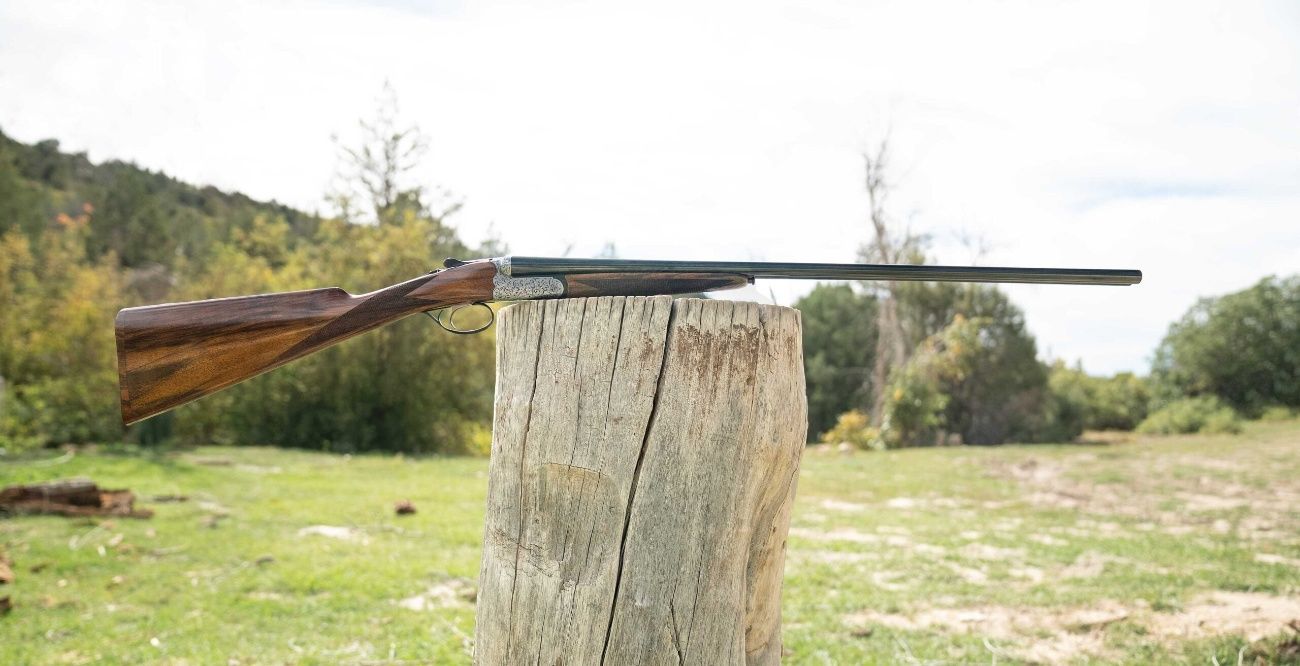
If you’re interested in learning more about balance, here are some titles which you might find helpful:
- Shotguns and Cartridges for game and clays, Gough Thomas
- The Modern Shotgun, Volume One, The Gun, Major Gerald Burrard
To find out more about Rizzini, visit their website here.
Comments
Loading comments…
Post a comment
to post a comment.