
Choosing the right shotgun for your shooting needs and style is tricky - there are just so many choices to make: side-by-side or over-and-under; gauge, maker, grip-type… the list goes on and on.
Most gunmakers offer a variety of models in a range, each subtly (but importantly) different, depending on their intended usage. For example, there are guns designed specifically for trap shooters, others designed for shooting game, and others are designed as all-rounders.
Since you’re reading this, there’s a pretty good chance that you plan to shoot some game, so for the purposes of this article we will ignore those guns that are exclusively intended for use as clay shooting guns (though there’s nothing stopping you from using a trap gun on game if you so desire) and focus on sporters and game/field guns.
In simple terms, game guns are designed to be used in live game situations, where sporters are designed to sit somewhere between a game gun and a dedicated claybuster. But what are the major differences, and do they matter?
Let’s take a look at a duo of entry-level guns from the same range - Browning B725 - and compare them. In the game corner, we have the B725 Hunter ‘Game’ in 12 bore, and in the Sporter corner we have the B725 Sport ‘Sporter’, also in 12 bore
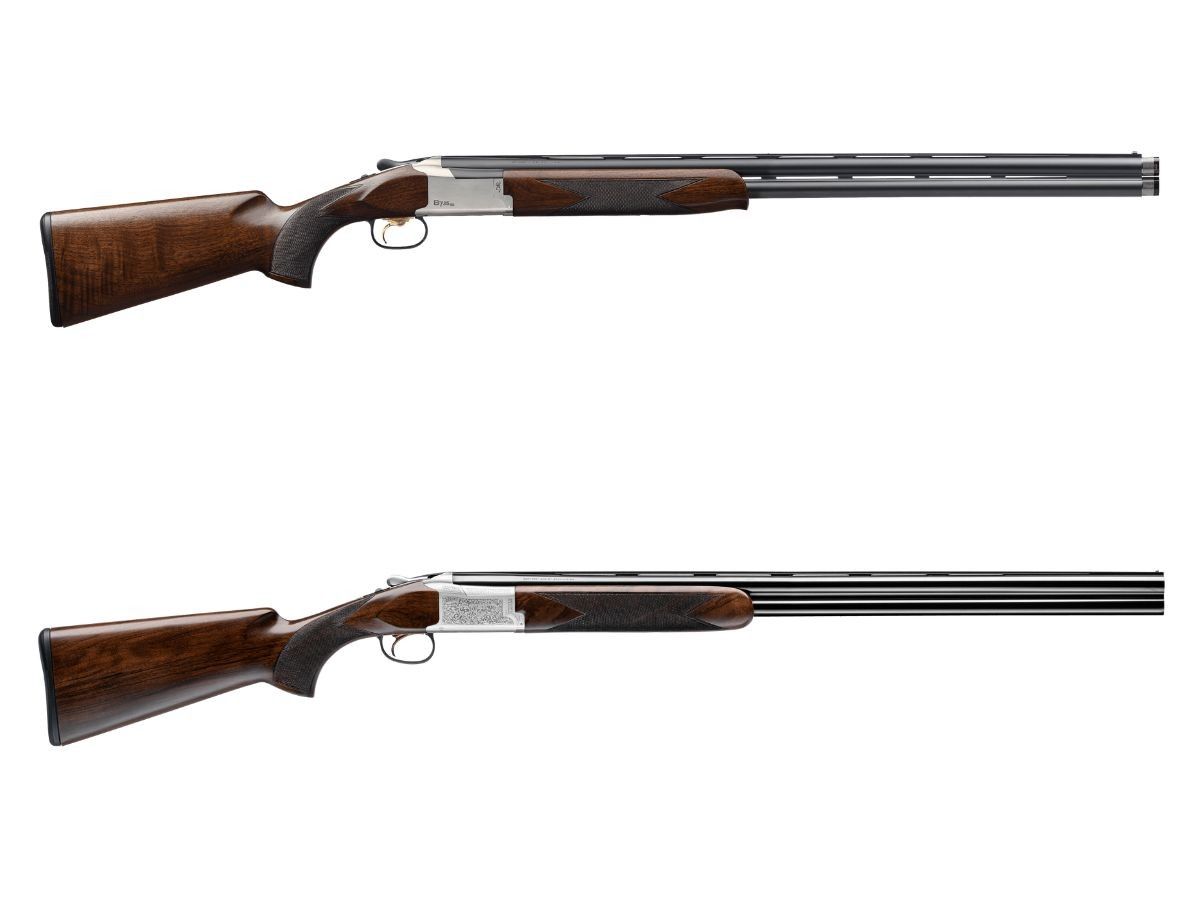
These two guns are built on the same action, and are more or less the same price, the Game having an RRP of £2640, the Sporter slightly cheaper at £2600. Both have non-adjustable stocks with the same measurements, with pistol grips. Both feature back-bored barrels, manual safeties and are available in both left and right handed versions.
That’s the similarities, so what makes these guns different from each other, and why does that make them better suited to their particular jobs.
Aesthetics
For whatever reason, a rule of thumb is that game guns are likely to have more elaborate aesthetics than sporters. While this obviously doesn’t change how the gun performs, many game shots prefer to have a gun that reflects the grandeur of a day out in the field.
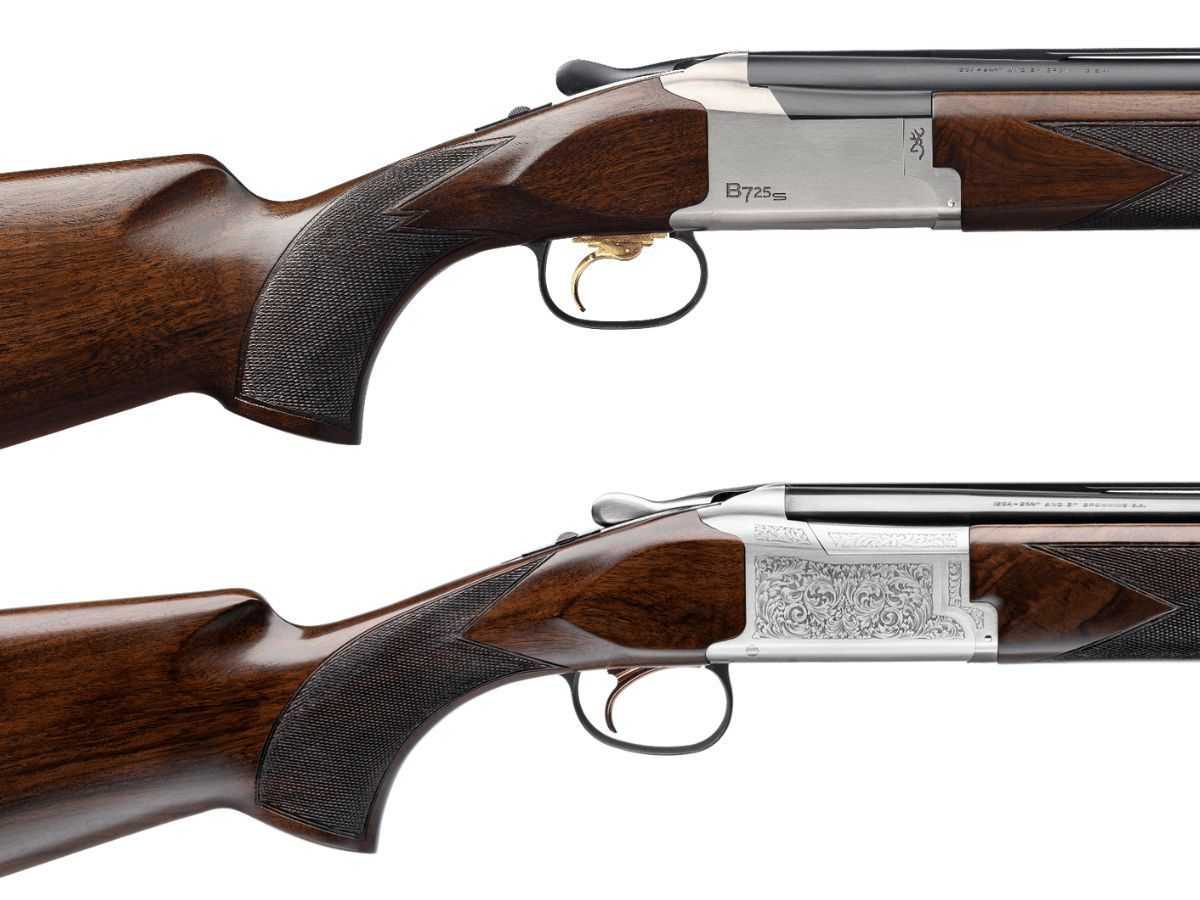
In the case of our two test subjects, the Game gun has acanthus-style scroll engraving, while the sporter has a plain action stamped with the B725 logo. Sometimes Game guns will feature gamescene engraving. In terms of the woodwork, the Grade 3 Turkish walnut is probably slightly fancier than the Grade 2 / 3 American walnut on the Sporter.
Stock and forend
Here we start to see a few more practical differences. The Sporter’s pistol grip features a palmswell to improve the gun’s ergonomics, which is not found on the Game. Up the front, the Sporter’s tulip forend also gives the shooter a good chunk of wood to grasp, all of which helps to deliver the repeatable gun mount that delivers consistent shooting on the clay ground. Both guns are fitted with Browning’s Inflex II recoil pads, which allows you to adjust the length of the stock using the interchangeable pads, increasing the length by as much as 20mm.

While the stock dimensions - in terms of drop-at-comb and drop-and-heel - are the same on both guns, the B725 Game has a slimmer, sleeker stock with the nose a little further back than that of the Sporter, and the neck of the stock is somewhat longer , giving a more elegant look. The narrower stock results in a narrower butt, which suits itself to the variable nature of shooting live game, where you need a little more versatility in the way you mount your gun.

Trigger & Safety
Clay shooting is all about marginal gains and everything being just so. To this end, the Sporter features an adjustable mechanical trigger, as well as a selection of different triggers, allowing you to not only adjust the length of pull, but also the shape of the trigger itself. Conversely, the Game has a fixed mechanical trigger. Both guns have manual (non-auto) safety catch, and a barrel selector.
Barrels, ribs and chokes
The B725 Game is available with 28 or 30 inch barrels, with a 6mm ventilated top rib leading to a brass bead and a solid mid-rib. It comes with flush fitting interchangeable Invector DS chokes.
The Sporter, by comparison, has extended chokes, a ventilated mid-rib and a white front bead. As well as 28 and 30 inch barrels, you can also get the Sporter in 32 inch. The top rib is 10mm.
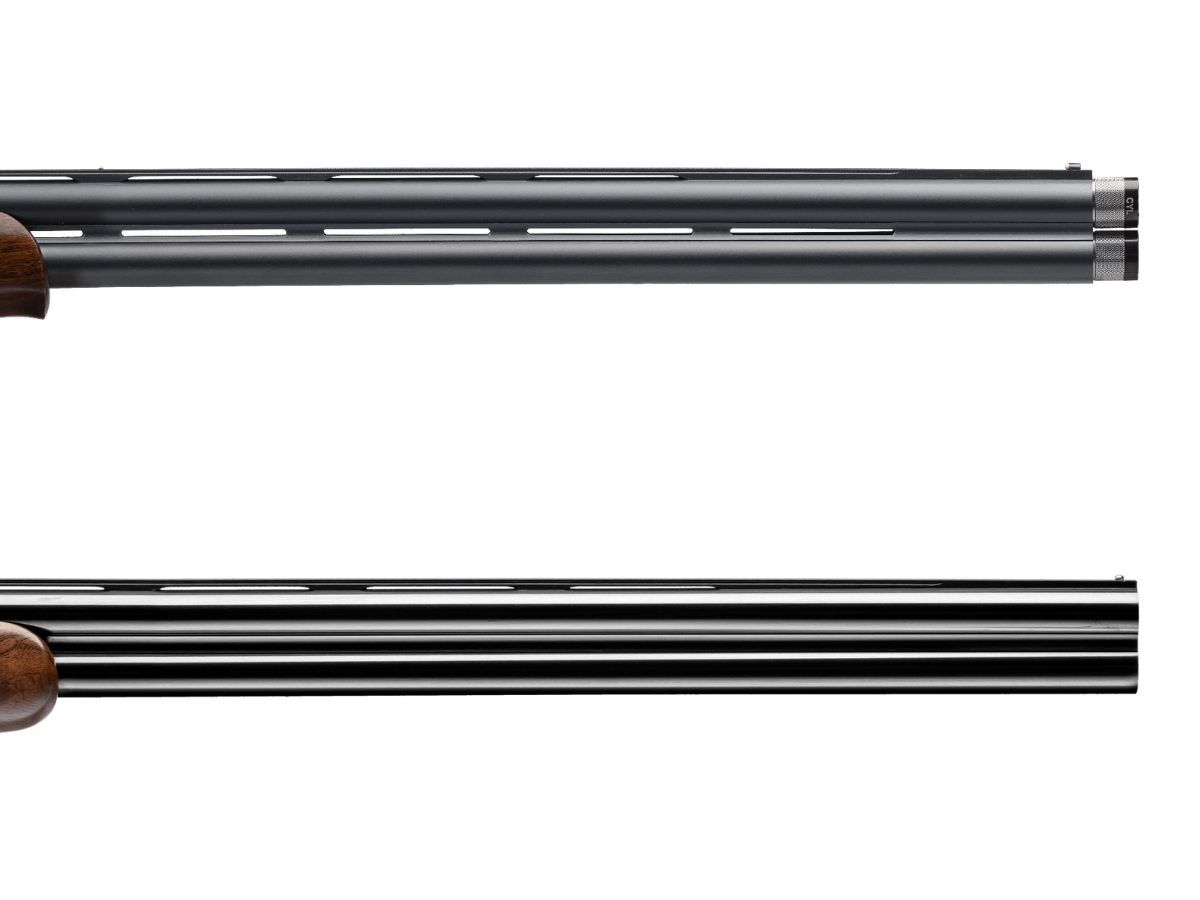
The advantage to the wider top is that it helps to dissipate the heat from the hot barrels, something that is more frequently a problem on a round of a hundred clays than it is on a day’s shooting, reducing the impact of heat haze coming off the barrels. The wider rib also helps to create a bigger sighting plane, assisting with target acquisition. The narrower rib on the Game allows for the more instinctive style of shooting that game shooting requires, where the focus of the eye should be on the bird - game shots prefer not to ‘see’ the barrels, hence, also, the less noticeable brass bead.
Weight
Naturally the overall weight of the guns will depend on what barrel length you choose, but a key difference between a sporter shotgun and a game shotgun is that the former is likely to be heavier than the latter. The extra weight in a sporter is well suited to clay shooting, allowing for a more precise, considered swing of the gun. Meanwhile, the relative lack of weight of a game gun makes them more agile and instinctive to shoot, making them more capable of the kind of snap shooting one might encounter in the field (or the woods!).
The extra weight of a sporter also helps to reduce felt recoil and muzzle flip, a boon not only when it comes to consistent shooting, but also in reducing the impact on one’s poor shoulder of a hundred cartridges fired over the course of two hours.
In a similar vein, a game gun’s lack of weight makes it far more comfortable to hold when standing on the peg waiting for the first birds of the drive - which on some shoots can be a fair old while - or to carry on a walked-up day. There are no gunracks on a game day as there are at each stand at the clay ground!
David Stapeley of International Sports Brands, the UK importer for Browning, told me that where the weight is positioned is also important:
In generic terms, a sporting gun will have a slight front heavy bias to aid swing-through on the target, were as the game gun will aim to get the weight centred between the hands making the gun feel alive and fast moving for reactive shooting.
Some more proficient shooters may want to adjust their gun's balance to suit their own style of shooting. On some of the more dedicated Browning target guns, “Pro” models will include a weight system for both the barrels and the stock, allowing a near infinite level of adjustment in terms of overall weight of the gun and the balance point.
Even on the base level gun discussed here, the sporting stocks are pre-prepared to accept the stock weight system and the barrel weight fit through the vented side ribs, offering the same custom set up as enjoyed by current World Champions and everybody else below!
Which is right for you
Well… that all depends. And I know, that sounds like a cop out. It would be easy to say that if you plan to exclusively shoot game, then a Game model is the one for you, and that if you want to do a bit of game and a bit of clay shooting, then the Sporter is what you should choose.
But the fact is that you are going to shoot far better with a gun that suits your own personal build and shooting style. It isn’t even true that a light(er)weight, shorter barrelled game gun is best for all game shooting situations - for example, if you’re doing lots of shooting in the Welsh Valleys or on Exmoor, where heavy loads are de rigeur, there are lots of good reasons for choosing the heavier and longer Sporter.
Nor is it true that you can’t or shouldn’t shoot clays with a ‘Game’ gun - if that’s what fits you best and suits your build and style of shooting, have at it.
The answer to the question ‘Should I buy a game gun or a sporter,’ unhelpfully if you’re looking for a definitive declaration, is ‘whichever you like the best.’
Find out more about Browning shotguns on the Browning website.
Comments
Loading comments…
Post a comment
to post a comment.