
In this article we’ll identify those five and advise on the best way to turn failure into success.
1. Steadiness
This is the big one – a part of training that causes most of the problems and it often has its root cause in doing too much dummy work too soon. Training a retriever to retrieve is as much about actually training it not to retrieve. Most retrievers are born with the natural instinct to do the job but the skill lies in getting the dog to do what comes naturally when we want the job done and only then. Panic often sets in with new owners who feel that if they don’t start throwing puppy dummies around the lawn when the pup is at a very young age the dog may grow up not to be a natural retriever. In very few cases is failing to retrieve a real concern but having started retrieving too young – and I mean very young – the die is cast for many pups and steadiness can be compromised. I am never in a rush to start throwing dummies for young dogs and when I do I’m not too worried about them “running-in” at the start. But having established that the pup is keen and old enough to understand what I really want, the transition from running-in to actually making the dog wait and to be told when to retrieve the dummy is very easy. So steadiness is not difficult to teach provided the dog is old enough to comprehend what you want it to do and you do it calmly and positively.

2. Avoiding the dropped dummy
So many young dogs start to retrieve well but then begin to drop the dummy at the feet of the handler or a yard or two in front. It’s a very common problem born out of a failure to teach the dog to come in close from the very beginning and perhaps more importantly by the handler being in a rush to take the dummy. I am amazed that so many people are fearful of their dog becoming hard mouthed if they delay taking the dummy because in most cases it’s actually grabbing at the dummy in a panic that causes the dog to start holding on too tightly. In effect the act of trying to avoid a problem developing makes it far worse! So to avoid a dog dropping the dummy makes sure you start to do your earliest retrieving from a crouching position to get the pup to come in close between your legs. And stroke the dog calmly and give words of encouragement. You need to make the dog feel that this is the greatest thing it has ever done and let it savour the moment with the dummy in its mouth. Gradually raise your body to receive the dummy over a number of training sessions but don’t be in a rush to take it.
3. Poor heelwork
Another issue linked to too much training too soon and excessive work on the lead. So many dogs are forced into heelwork training with yanking and jerking and pulling – and in most cases it’s all done when the dog is too young. As with a lot of training problems the core issue is that the dog is not old enough to understand what’s wanted so force is applied and then there is an immediate battle of wills. I want youngsters to be walking at my heel confidently and attentively before I even put a lead on – and for me a lead may not go around a dog’s neck until it’s six months old. But I know that when I do slip a lead on I will have that dog walking by my side sweetly within minutes – and it’s all to do with the fact that the dog understands what I want it to do because it’s already used to walking by my side unrestricted. Yes, this preliminary free-heel work can be sloppy and yes the dog can wander and waver a bit but that doesn't matter too much to me because training-proper hasn’t really started. All we are doing is laying the loose foundations of understanding and trust and developing the working partnership that we need for the future. So use a few treats, some words of encouragement and keep your cool and try some off-lead heelwork first. You will be surprised at how easy is the transition is to heelwork on the lead.
4. The stop
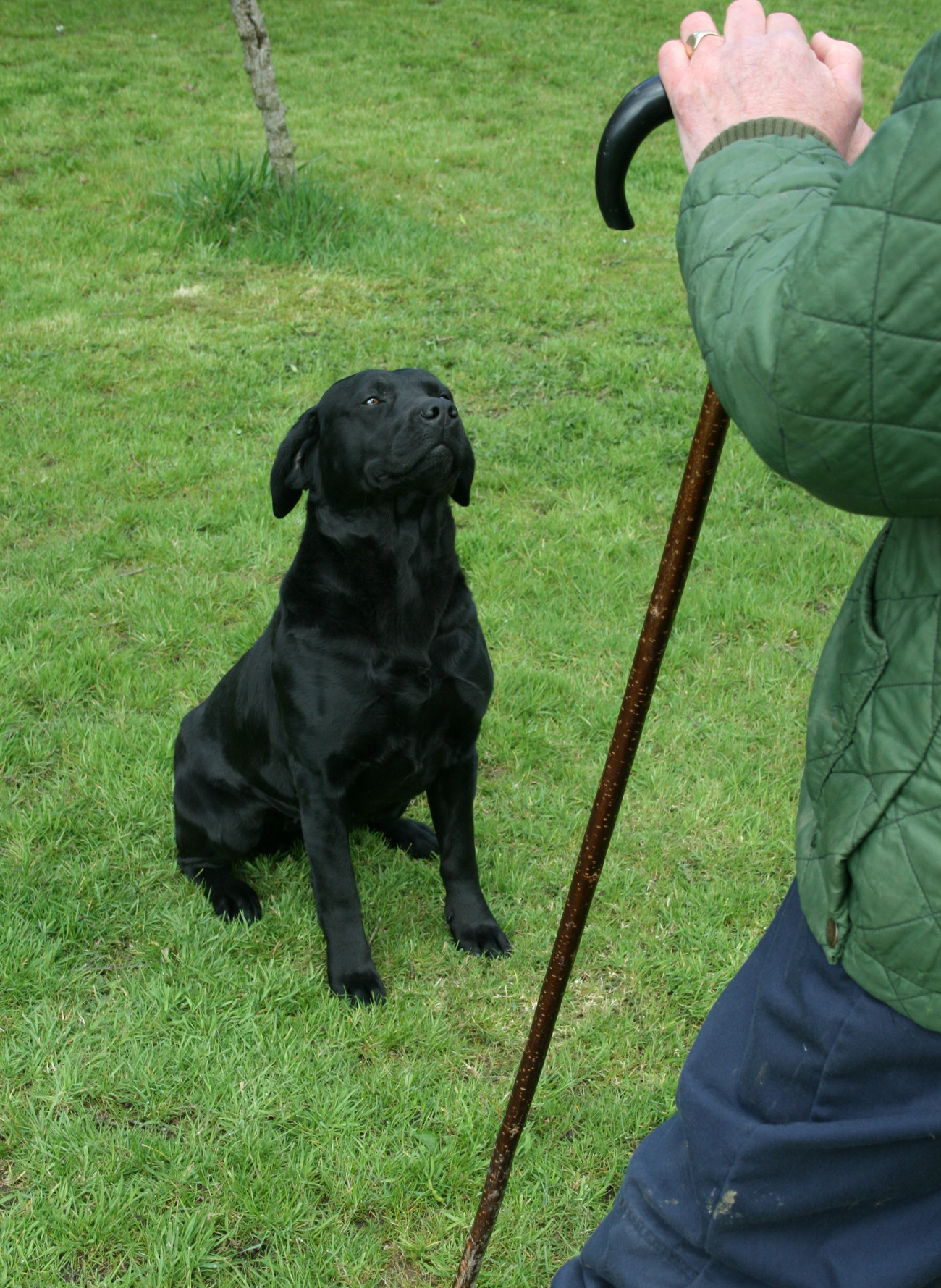
Struggling to get young dogs to learn to respond to the stop whistle can be a big hurdle for many first time trainers. How often have we seen dogs being yelled at from a distance and handlers hot-footing it across the field to admonish a dog that has failed to respond? What a sad sight that is and how unnecessary when a careful approach to the “stop” whistle can so easily achieve the desired result. Yes, some dogs are more receptive than others to the stop command but this is an instruction that has to be learnt at a short distance and where a young dog can see and hear the commands of the hand, the voice and the whistle. If you haven’t mastered the stop at a short distance from you don’t expect that a dog 30 yards away will suddenly go rigid when you blow your whistle. So begin in a confined area with the early stop training sessions and then start to ask for some close-up stops when the young dog is just a few yards away. The stop is not about instilling fear and scare tactics; it’s about achieving a confident response from the dog whose mind will still be on the job in hand when he stops and ready to take the next instruction rather than be over hesitant and lacking in confidence to move on when told.
5. Giving up the ghost on a blind retrieve
So often we see young dogs lose confidence when sent out for a blind retrieve and either dry up and sit and wait for an instruction or come dashing back to the handler. In both cases these young dogs are, in the most part, asking for reassurance and yet in many cases their failure is seen as warranting correction and firm words and handling. This is so wrong. Start blind retrieves at very short distances and put out enough dummies to ensure the dog succeeds in finding one. Don’t stand there and say nothing. Encourage the dog to hunt and do it verbally at first as well as using a whistle command if you want to. The aim of this exercise in these early stages is to keep the fuel flowing in the tank, keep the dog energised and active and keen and determined to do the job. Once the dog is confident and understands what blind retrieves are all about you can gradually reduce the verbal but don’t take away the water wings until the dog can swim!

Jeremy Hunt is GunsOnPegs' dedicated gundog writer and is also the owner of Fenway Labradors. He has been breeding Labradors for over 25 years and is based in Lancashire, England.
Jeremy also runs gundog training days offering individual or small group training sessions, by the hour, half or full day.
jeremy@fenwaylabradors.co.uk
07798 826179

Comments
Loading comments…
Post a comment
to post a comment.